




Halloween is supposed to be a night of make-believe scares. But some of history’s most notorious crimes have unfolded on Oct. 31, turning a holiday associated with fictional horrors into the backdrop for real tragedies.
From a killer who disguised herself as a trick-or-treater to an audacious helicopter jailbreak, these five Halloween crimes made headlines — sometimes by design, sometimes by coincidence.
A killer disguised herself as a trick-or-treater (1957)
On Halloween night in 1957, Peter Fabiano answered a late-night knock at his home in Sun Valley, California, near Los Angeles.
The 35-year-old beauty salon owner encountered someone dressed as a trick-or-treater. But this was no Halloween prank. The visitor shot Fabiano in the chest, and he died shortly afterward.
Editor's Picks
The investigation led police to two women: Goldyne Pizer, who carried out the shooting, and Joan Rabel, who helped plan the murder.
According to a Dec. 7, 1957, report in the Valley Times, Rabel had been close to Fabiano’s wife, Betty, during the couple’s separation. Peter and Betty had since reconciled.
Pizer told investigators that Rabel had convinced her Fabiano mistreated his wife and deserved to die. Although Pizer had never met him, she said Rabel’s claims led her to develop an intense hatred for Fabiano.
Police recovered the murder weapon from a department store locker. Both women pleaded guilty to second-degree murder in March 1958 and were sentenced to five years to life in prison the following month.
The case became known as the Halloween trick-or-treat murder, with the holiday providing cover for a planned killing.
Three IRA prisoners pulled off a daring helicopter jailbreak (1973)
On Oct. 31, 1973, three Irish Republican Army prisoners escaped from Mountjoy Prison in Dublin, Ireland, using an unlikely getaway vehicle: a helicopter.
Armed men hijacked an Alouette II helicopter and forced its pilot to fly to the prison, where the aircraft descended into an exercise yard.
The three prisoners — Séamus Twomey, J.B. O’Hagan and Kevin Mallon — climbed aboard. Within moments, the helicopter was airborne again, carrying the men over the prison walls. The escape took just 30 seconds.
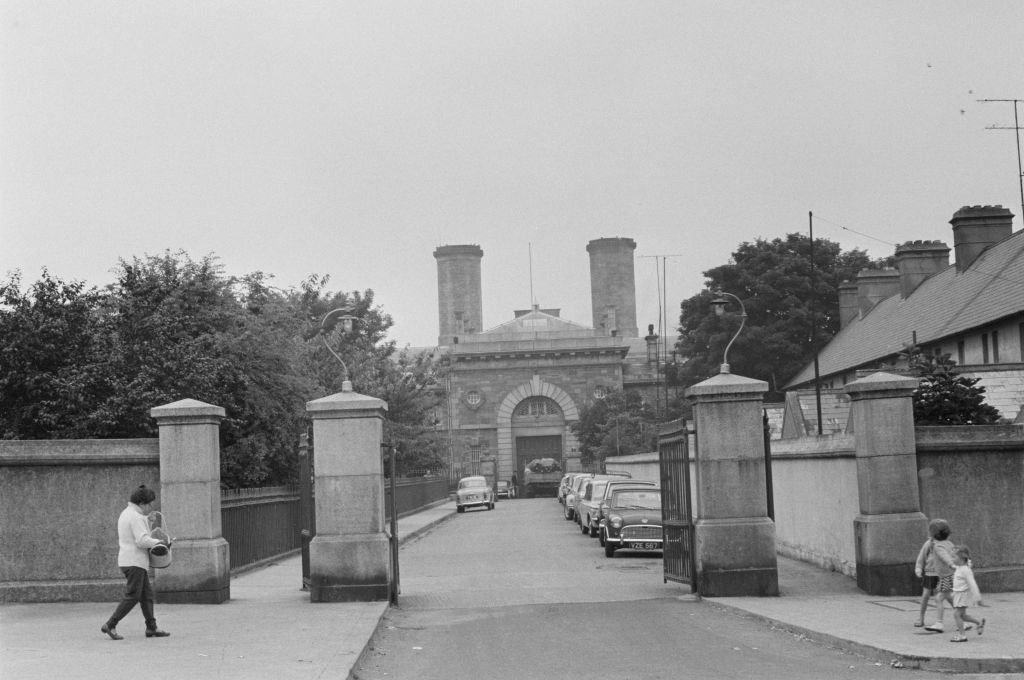
But the getaway wasn’t over. The helicopter landed at Baldoyle Racecourse, where the fugitives transferred to a waiting car.
The escape made international headlines and prompted Irish Prime Minister Liam Cosgrave to order an inquiry into prison security. The following week, authorities transferred IRA prisoners from Mountjoy and the Curragh detention camp to the more secure Portlaoise Prison.
All three escapees were eventually recaptured. Kevin Mallon was arrested in December 1973, followed by J.B. O’Hagan in January 1975. Séamus Twomey remained at large until his arrest in Dublin in December 1977.
A father poisoned his son’s Halloween candy (1974)
On Halloween night in 1974, 8-year-old Timothy O’Bryan went trick-or-treating with his father and other children in Pasadena, Texas, near Houston.
Later that evening, Timothy ate candy from a cyanide-laced Pixy Stix. He became violently ill and died shortly afterward.

The killing initially raised fears that someone had deliberately handed out poisoned Halloween candy. But the investigation took a disturbing turn when police arrested Timothy’s father, Ronald Clark O’Bryan, just days later.
Investigators discovered O’Bryan had distributed five pieces of cyanide-laced candy to children, including his son. None of the other children ate the poisoned treats.
Prosecutors argued that O’Bryan had murdered Timothy to collect life insurance money. Deeply in debt, he had taken out insurance policies on his children before Halloween.
In June 1975, O’Bryan was convicted of capital murder and sentenced to death. He was executed by lethal injection in March 1984.
India’s prime minister was assassinated by her bodyguards (1984)
On the morning of Oct. 31, 1984, Indian Prime Minister Indira Gandhi was walking from her residence in New Delhi to an interview with British actor Peter Ustinov when two of her own bodyguards opened fire.
The 66-year-old leader was rushed to a hospital, where she died from her injuries. Her son, Rajiv Gandhi, was sworn in as prime minister later that day.
The assassination came nearly five months after Gandhi ordered a military operation at the Golden Temple in Amritsar, Sikhism’s holiest shrine. The June 1984 operation, intended to remove armed Sikh militants from the complex, left hundreds dead and damaged the sacred site.
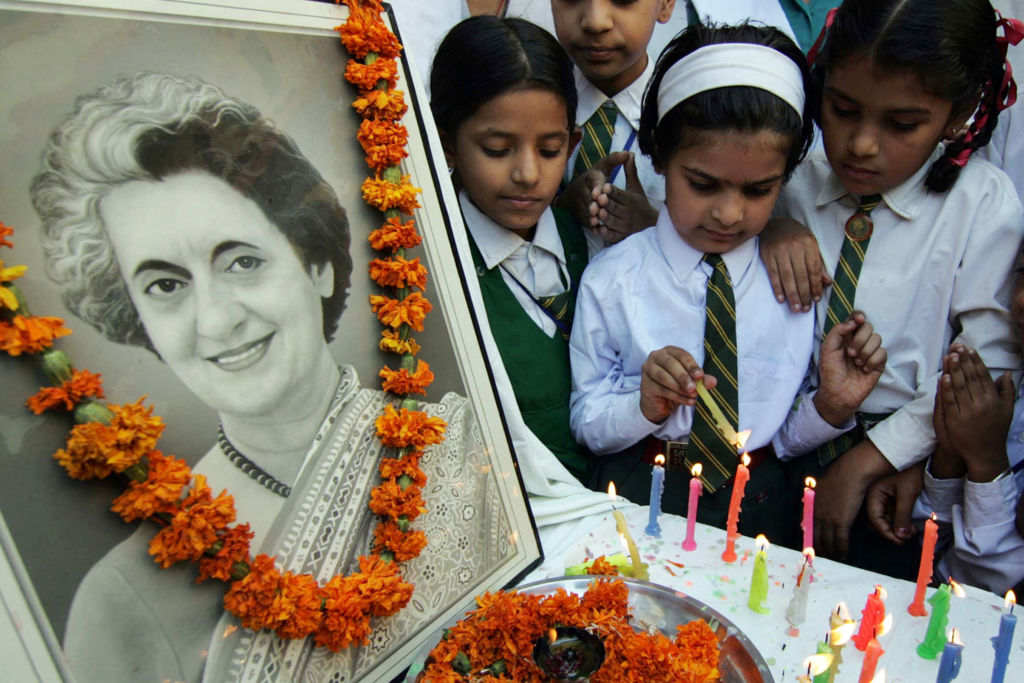
The two gunmen, Beant Singh and Satwant Singh, were Sikh members of Gandhi’s security detail. Beant Singh was killed by other security personnel shortly after the shooting, while Satwant Singh survived.
Satwant Singh was later convicted of murder and executed in January 1989 alongside Kehar Singh, who had been convicted of conspiracy in the assassination.
Gandhi’s assassination was followed by widespread anti-Sikh violence. Mobs attacked Sikh communities in New Delhi and elsewhere in India, killing thousands over the following days. According to Human Rights Watch, at least 2,733 Sikhs were killed in Delhi alone, with hundreds more killed elsewhere in the country.
A truck attack killed 8 people in New York City (2017)
On Halloween afternoon in 2017, a man drove a rented truck onto a busy pedestrian and bicycle path along the Hudson River in Lower Manhattan, killing eight people and injuring many others.
The driver, Sayfullo Saipov, carried out the attack in support of the Islamic State group, according to federal authorities. Among the victims were five friends from Argentina visiting New York City for a school reunion.
The choice of Halloween was deliberate. Investigators said Saipov selected Oct. 31 because he expected more people to be outside celebrating the holiday.
Federal prosecutors said Saipov had spent months planning the attack and rented a truck beforehand to practice driving it. He intended to continue his attack toward the Brooklyn Bridge but crashed into a school bus, bringing the truck to a stop.
In January 2023, a federal jury convicted Saipov on 28 counts, including murder and attempted murder. Jurors later failed to reach a unanimous decision on imposing the death penalty, making a life sentence mandatory.
In May 2023, a federal judge sentenced Saipov to eight consecutive life terms, two concurrent life terms and an additional 260 years in prison.